
Kategori
Blog Baru
RS485 Water Quality Potassium Ion Sensor Purchase Guide
April 17 , 2026
In the field of water quality monitoring, potassium ion concentration is an important indicator for evaluating water nutrient levels, industrial emission compliance, and aquaculture health. Faced with a variety of online potassium ion sensors on the market, how to choose a stable, reliable and easy-to-integrate product? This article provides a comprehensive guide from three aspects: core advantages, typical application scenarios and key purchasing points.
I. Core Advantages: Why Choose RS485 Digital Potassium Ion Sensor?
1. High Precision and Automatic Temperature Compensation
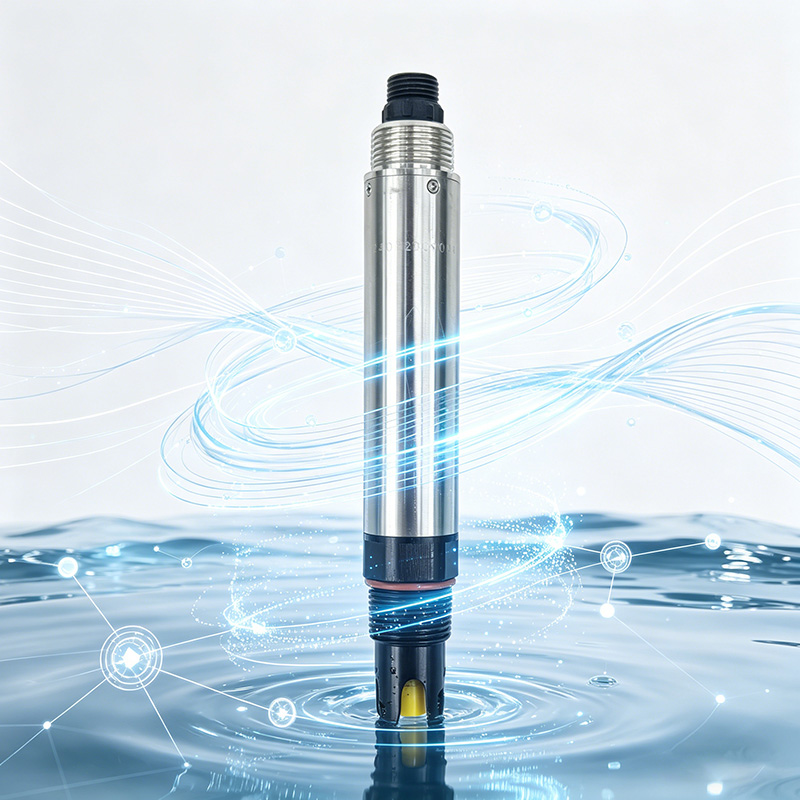
The sensor adopts a PVC membrane potassium ion selective electrode, with optional measurement ranges of 0~100mg/L or 0~1000mg/L, and a resolution as high as 0.01mg/L. The measurement accuracy is ±10% of the reading or ±1mg/L. Equipped with a built-in Pt1000 temperature sensor, it supports automatic temperature compensation, which effectively eliminates the impact of water temperature changes on ion activity and ensures data consistency in different seasons and water areas.
2. Industrial-Grade Design, Adaptable to Harsh Environments
The whole machine reaches IP68 protection level and can be immersed in water for long-term work. Two shell materials are available: ZW-K-PR-A (POM+ABS) is suitable for conventional water quality; ZW-K-PR-S (POM+316L stainless steel) has stronger corrosion resistance and is suitable for seawater or salt-containing industrial wastewater. The 3/4NPT pipe thread supports submersible or pipeline installation, and the installation inclination angle is not less than 15°.
3. Digital Communication, Flexible Integration
Standard RS485 interface, adopting standard Modbus/RTU protocol, with a maximum communication distance of more than 1000 meters. Optional 4-20mA analog output is available for easy connection to PLC, DCS, industrial control computers or touch screens. Wide voltage power supply (12-24V DC) with a typical power consumption of only 0.2W, suitable for solar-powered field monitoring stations.
4. Long-Life Electrode and Simple Maintenance
The reference solution inside the patented electrode seeps out slowly under a pressure of at least 100kPa, the reference system is stable, and the electrode life is much longer than that of ordinary industrial electrodes. It supports two-point on-site calibration (zero point and slope), which has been pre-calibrated at the factory. Users only need to recalibrate when the error exceeds the standard. If not used for a long time, store it dry and cover the protective cap.
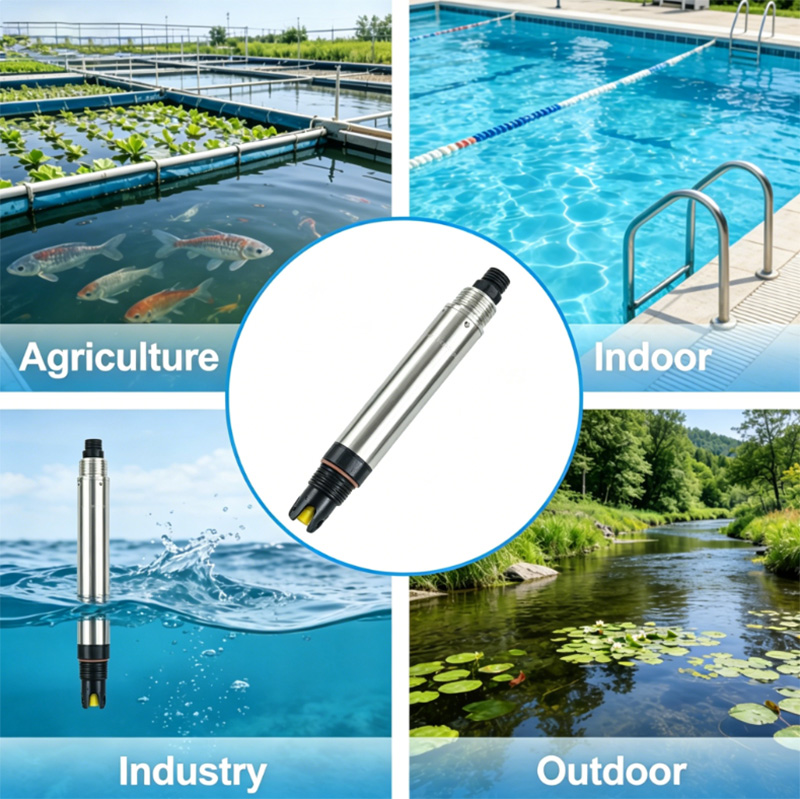
II. Typical Application Scenarios
III. Key Purchasing Guidelines
1. Range selection: 0~100mg/L (resolution 0.01mg/L) is usually selected for freshwater environments; 0~1000mg/L (resolution 0.1mg/L) is recommended for high-concentration wastewater or seawater.
2. Material selection: POM+ABS is sufficient for conventional working conditions; if the water contains chloride ions or is weakly acidic or alkaline, POM+316L model is preferred.
3. Communication protocol: Confirm whether the upper computer supports Modbus RTU. If 4-20mA output is required, indicate the optional configuration when placing the order.
4. Cable length: The standard configuration is 5 meters, and longer cables can be customized according to on-site needs. Note that all wiring points must be waterproofed.
5. Calibration solution: 100mL each of 10mg/L and 100mg/L (or 100/1000mg/L) calibration solutions are provided as standard at the factory. You can prepare sufficient consumables at the time of purchase.
6. Quality assurance service: The whole machine is guaranteed for one year, and the electrode, as a consumable, is guaranteed for half a year. Avoid placing the sensor in distilled water, protein solution or organic solvent for a long time to prevent damage to the PVC membrane.
Conclusion
Choosing a suitable online potassium ion sensor depends not only on accuracy and range, but also on its environmental adaptability, communication compatibility and later maintenance costs. With high precision, IP68 protection, Modbus digital output and long-life electrode, the RS485 water quality potassium ion sensor has become a reliable choice in the field of water quality monitoring. It is hoped that this purchase guide can help you make wise decisions and achieve efficient and accurate water quality management.https://www.zonewuiot.com/water-quality-sensors_c1

Tel : +86 18146178586
Whatsapp : +86 18146178586
E-mel : qui@zonewu.com
Tambah : 1501-3, Building F03, Phase III, Software Park, Jimei District, Xiamen City, Fujian Province, China