
IoT product and technology solution provider

Phosphine (PH₃) Sensor Selection Guide: How to Choose the Right Gas Monitoring Solution for Your Application

August 31 , 2026


Phosphine (PH₃) is a colourless, pungent and highly toxic gas, as well as a strong reducing agent. Its toxic threshold limit value (TVL) is below 0.3 ppm. Any leakage can cause severe damage to the central nervous system. For this reason, real-time phosphine monitoring is critical for industrial safety, agricultural production and environmental protection.

With numerous PH₃ sensors available on the market, how do you make the right choice? This practical selection guide covers key dimensions to support your decision-making.

1. Define Your Application Scenario: Range and Accuracy Requirements Vary Widely

PH₃ sensors are mainly deployed in three major fields, each with distinct range and accuracy demands:
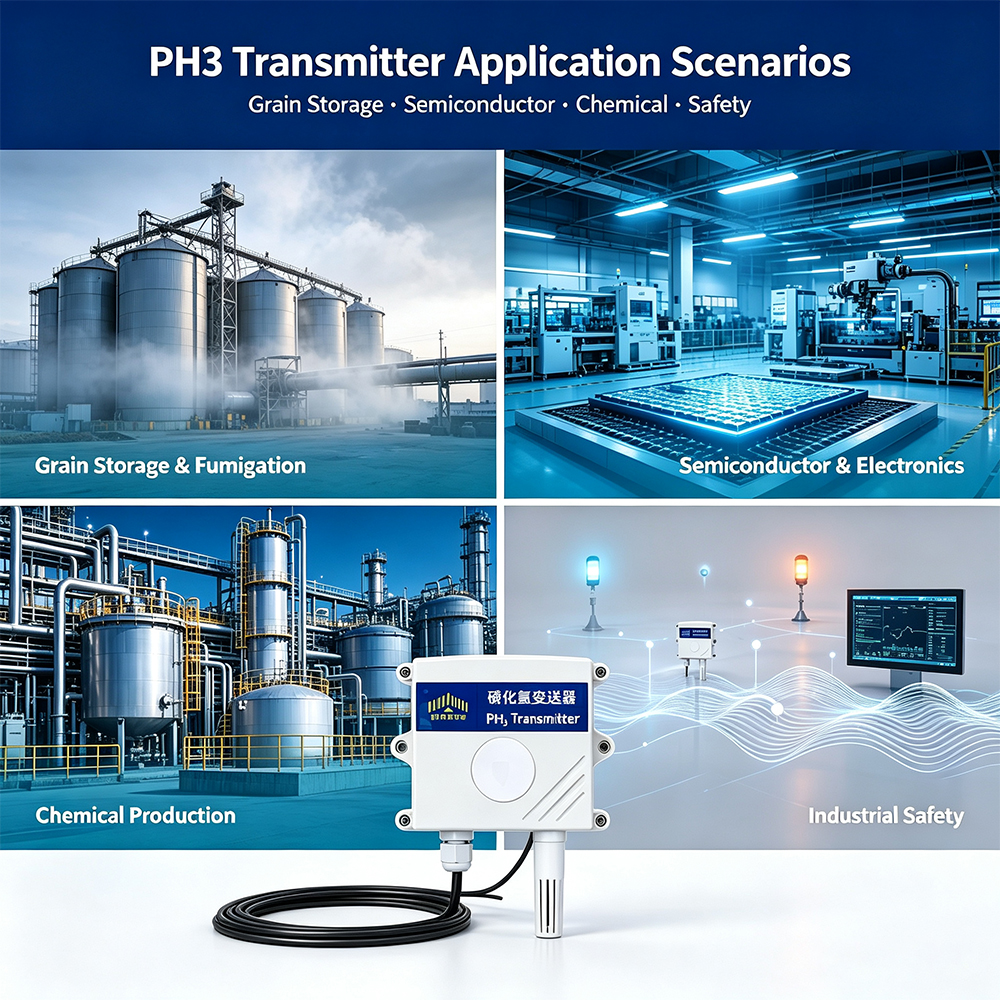

  • Grain storage and fumigation operations: This is the most traditional and widespread application for phosphine. Continuous PH₃ concentration monitoring is required during grain silo fumigation. Low-range sensors (0-10 ppm or 0-20 ppm) with excellent long-term stability are generally preferred for this scenario.
  • Semiconductor and electronics industry: Phosphine serves as an N-type dopant source for ion implantation and epitaxial growth on silicon wafers. Semiconductor cleanrooms impose extremely high standards for gas purity and safety, calling for high-accuracy, fast-response sensors.
  • Chemical manufacturing and industrial safety: Phosphine leakage risks exist during the handling, storage and transportation of phosphide compounds. Wide-range sensors (0-1000 ppm) with explosion-proof and waterproof industrial-grade construction are often required here.


2. Focus on Core Performance Metrics: Accuracy, Measurement Range and Response Time

Three technical parameters deserve close attention during sensor selection:


Metric

Description

Selection Recommendation

Accuracy

High-precision instruments typically feature errors of ±1%~±3% for reliable detection of trace leaks; low-precision units may show errors of ±5%~±10%.

High-precision models are recommended for safety-critical areas such as grain silos and chemical workshops.

Measurement Range

Common ranges include 0-10 ppm, 0-20 ppm and 0-1000 ppm.

Select according to the actual potential leakage concentration. Excessively large ranges will compromise low-end resolution.

Response Time

Industrial-grade PH₃ sensors normally achieve a T90 response time ≤ 60 s; premium models can reach ≤ 30 s.

Faster response enables early-stage alarm upon gas leakage.


3. Output and System Integration: RS485 + Modbus as the Industrial Standard

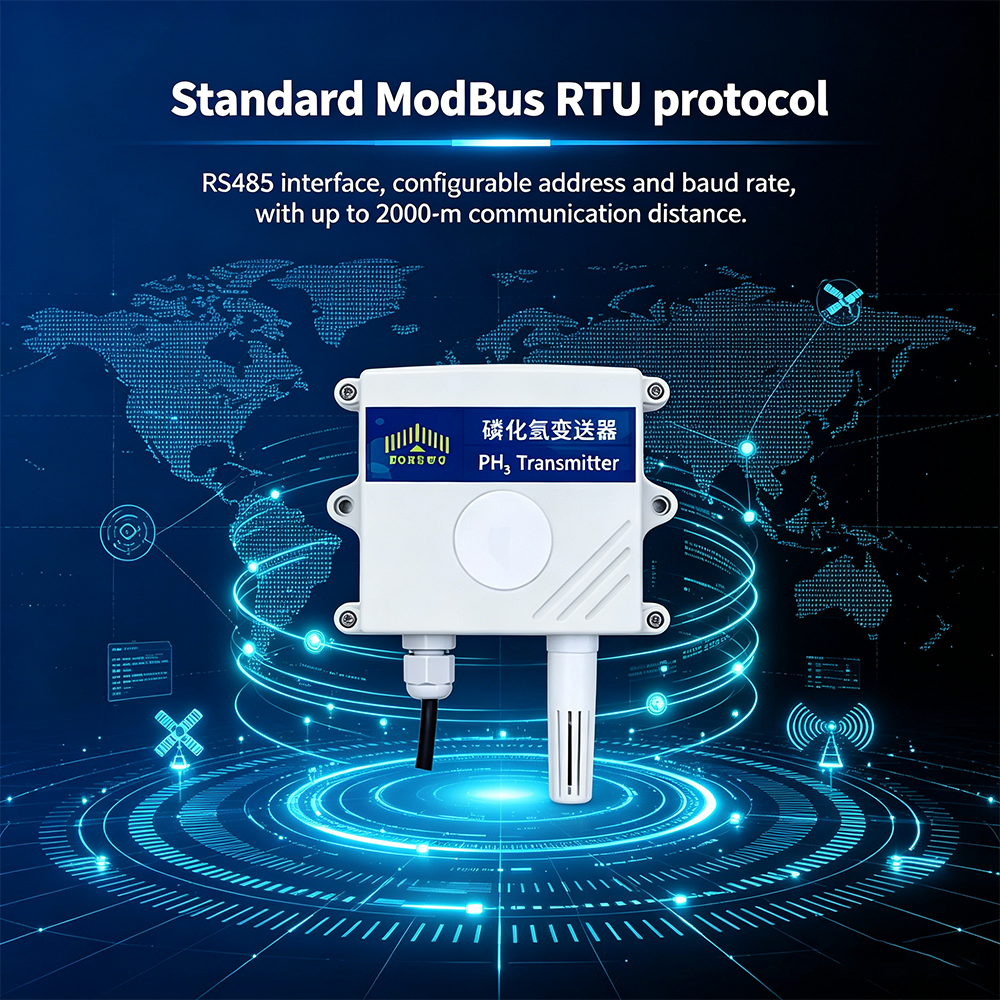
For industrial automation, sensor output directly determines compatibility with PLCs, DCS, industrial PCs and other systems. RS485 digital output paired with the Modbus-RTU protocol is the mainstream solution for industrial gas monitoring, offering the following benefits:


  • Long-distance transmission: RS485 supports communication distances over 1200 metres.
  • Multi-node networking: Bus-type connection supports multi-point monitoring deployments.
  • Strong anti-interference performance: Differential signal transmission suits harsh industrial sites.


For projects integrating with existing monitoring systems, prioritise RS485 + Modbus-enabled sensors to significantly reduce integration complexity and costs.
4. Environmental Compatibility: Waterproofing, Wide-Voltage Power Supply and Broad Operating Temperature Are Essential

PH₃ monitoring often takes place in harsh conditions: high humidity inside grain silos, corrosive vapours in chemical plants, and outdoor installations requiring dust-proof and waterproof performance. Pay attention to:


  • Ingress Protection (IP) Rating: Higher IP65 / IP66 / IP68 ratings deliver superior dust and water resistance.
  • Power-supply voltage: Wide-voltage input (e.g. 5-28 VDC) adapts to diverse on-site power conditions.
  • Operating temperature: Ensure stable performance across -20 °C to 50 °C.


Recommended Solution: PH3 (RS485) High-Accuracy Phosphine Sensor

Aligning with the above-mentioned selection criteria, the PH3 (RS485) phosphine sensor is a viable option:


  • Electrochemical principle: Adopts a three-electrode electrochemical cell. It precisely calculates gas concentration by measuring current generated via redox reactions of target gas on electrodes. This principle delivers high sensitivity and good gas selectivity.
  • Wide measuring range (0-1000 ppm) with high resolution (0.1 ppm): Covers high-concentration leak detection for industrial safety while providing fine resolution for low-concentration measurements.
  • RS485 + Modbus-RTU output: Directly connects to PLC, DCS and other industrial control systems for remote centralised monitoring.
  • 5-28 VDC wide-voltage power supply: Compatible with various on-site power sources.
  • Wall-mount waterproof construction: Suitable for demanding environments including grain silos and chemical workshops.


https://www.zonewuiot.com/rs485_c17


Langgan Surat Berita Kami
Daftar untuk berita terkini syarikat kami!
Dapatkan Sebut Harga Percuma
Jika anda berminat dengan produk kami dan ingin mengetahui butiran lanjut, sila tinggalkan mesej di sini, kami akan membalas anda secepat mungkin.

Rumah

Produk

tentang

Kenalan